
Minor spoilers for Resident Evil Requiem below.
You know the band Radiohead? Stick with me here. They broke through in the 90s with a couple of excellent rock albums, one of which is considered their magnum opus. They then completely changed their style, and found a new set of fans. Everything since has been some mixture of the two, and some of it has been fantastic. But many fans still cling to either one style or the other, often in vehement opposition to each other.
It’s a laboured metaphor, but I think it suits Resident Evil. Few game franchises have ever persisted for so long that they go through several distinct changes of style. Fewer still have been successful in this, to the extent that different games have attracted almost entirely different audiences.
This tension was clearest in the last main series game, Resident Evil Village. I characterised that in my review as a fairground ride through Resident Evil history: from the domestic horror of the original and 7, to the distinct and colourful zones of 4, to the madcap action of 5 and 6. It’s a theme that reemerges in Resident Evil Requiem—with both greater and lesser success.
Let’s set the stage, then. Requiem opens with a new character, Grace Ashcroft, a young analyst at the FBI. She’s tasked with returning to the scene of her own mother’s murder, a condemned hotel where the body of a Raccoon City survivor has been found, with signs of a new infection.
Along the way, she attracts the attention of prime suspect and former Umbrella researcher Victor Gideon, who’s being tailed by fan favourite Leon Kennedy. Events quickly bring them to the Rhodes Hill Chronic Care Center, where both characters start to grapple with why survivors of the original outbreak are being picked off, and what exactly is so special about Grace.
It’s here that we get into the meat of Grace’s gameplay, and arguably where the game shines brightest. Grace is a horror protagonist in a mold that may, unbelievably, be completely new to Resident Evil. Unlike previous rookies like Claire, who have quickly acclimatised to the insanity around them, Grace is believably fragile, if never completely deterred.
She’s voiced in virtuoso fashion by Angela Sant’Albano, who deserves (and is likely to win) every award going. The character’s stutter—hinted to have developed after her mother’s death—is deeply endearing, and the performance makes her comfortably the most sympathetic and empathetic Resident Evil character to date.
Seldom will you find a more perfect riposte to the idea of a voiceless, cipher protagonist. Grace reacts to the unfolding horror of her circumstances in a way that’s absolutely believable within the narrative, and completely relatable to the player. It’s a performance so captivating that it immediately positions her as a successor for future games, if Capcom proves brave enough to go there.
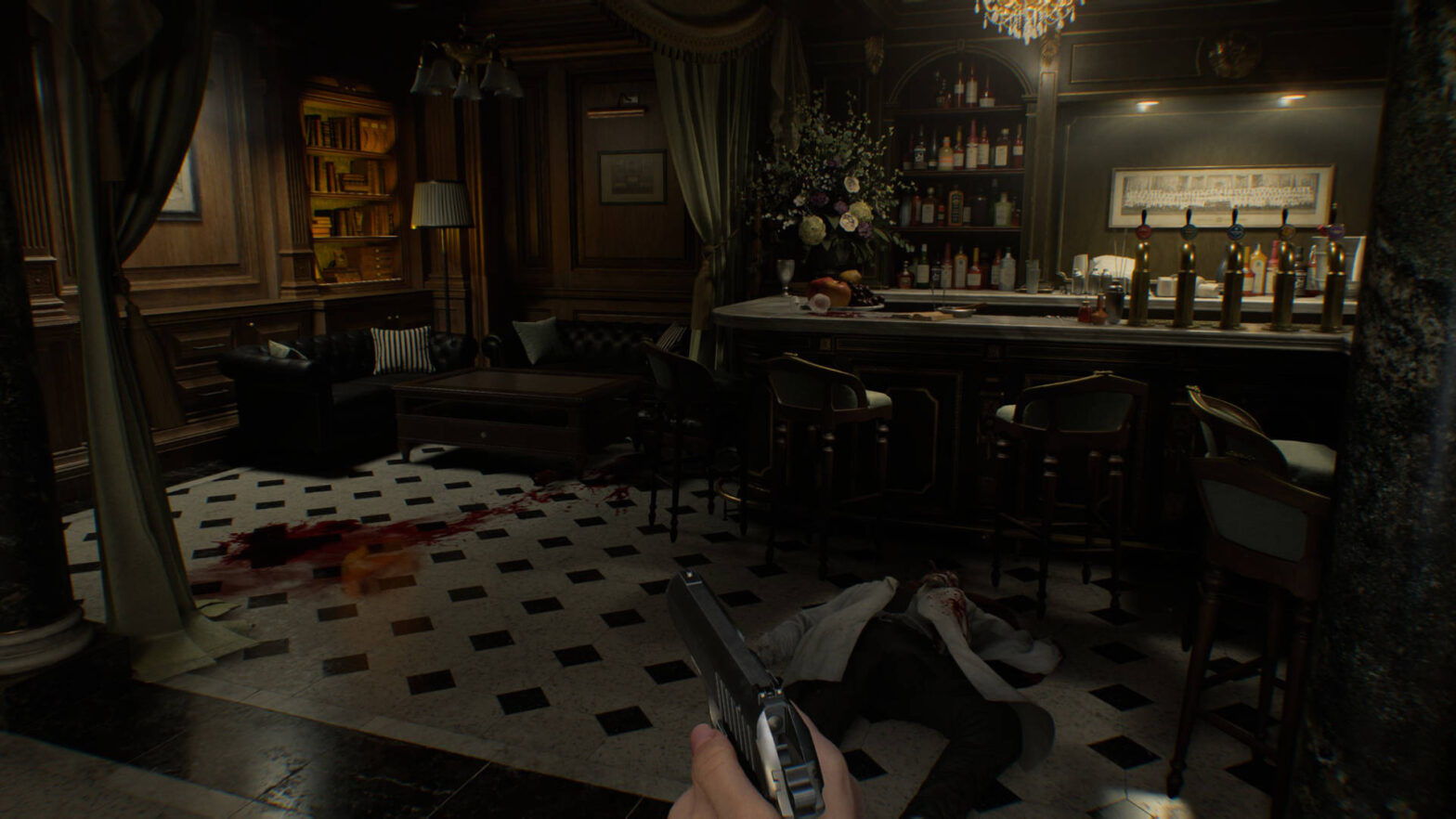
What follows is, and I might be over-egging this, one of the best self-contained horror experiences ever. There is almost nothing negative to say about this section of the game, which sees you skulking around an ornate old building in classic Resi fashion. It’s also here, funnily enough, where the evolution from Resident Evil 4 is most prominent. The stealth kills in that game are inherited in this one, with Grace able to take down enemies from behind with an expensively crafted item.
This is one of three methods you have to fight enemies as Grace for most of the game. The first is a pistol, which gets an upgrade, but remains relatively under-powered. The second is the titular Requiem, a comically oversized hand cannon and self described ‘assault pistol’, for which ammo is vanishingly rare.
They’re part of an item economy that’s broadly excellent, if slightly erring towards action. Central to it all is the concept of gathering blood, which is used as the main crafting resource. As it makes everything from handgun bullets to injectors to (on Classic mode) ink ribbons for saving, your choices define your playstyle. It’s possible to play Grace’s sections very differently, either by acting with extreme caution, or somewhat reckless abandon. Focus too much on combat, and you may find yourself flying by the seat of your pants, as you try to avoid losing half an hour of progress.
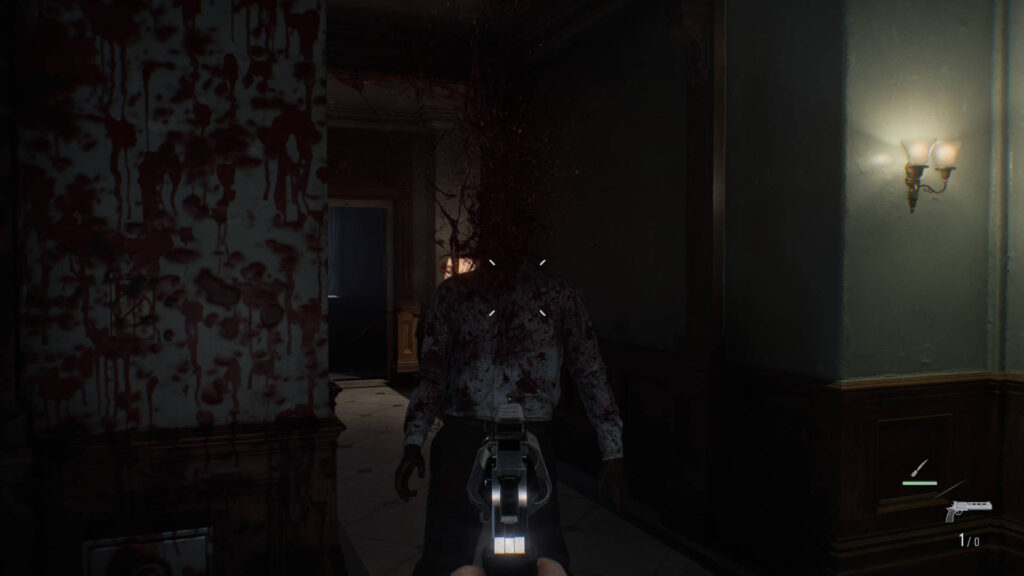
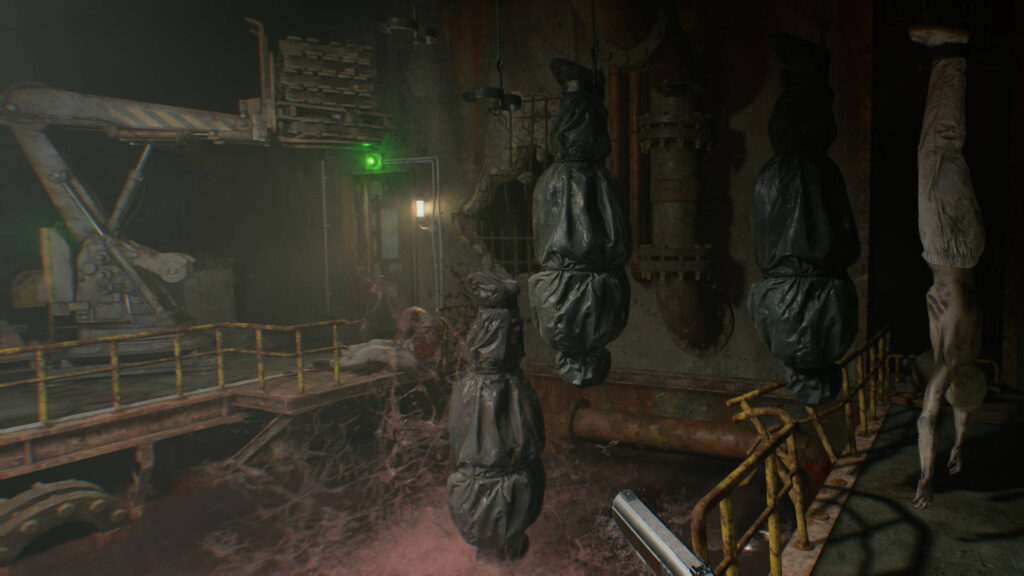
All of this is enhanced by the Care Center itself. It’s a precision engineered web of interconnecting corridors and stairwells, whose dynamics and routing change as the game progresses. There’s also no shortage of creativity in the creatures that populate them. In classic Romero fashion, these are high-functioning zombies, continuing to perform a facsimile of their old routines. I wouldn’t want to spoil any of them, save to say that almost all of them interact with the environments around them in a unique way.
This is the game at its creative peak. The mechanics are familiar, but applied in ingenious ways. You can interact with the environment to bait some enemies, or turn others against each other. Mini-bosses change routes as the game progresses, forcing you to find longer and sketchier paths. Like the other RE Engine games, enemy behaviour remains a highlight, with the zombies lurching and staggering to avoid your shots, and changing acceleration.
Leon plays his part here, too. There’s an undeniably cathartic thrill to the switch from Grace to Leon, where you’re powerful enough to overcome any one enemy with ease, but there’s rarely just one to deal with. The game revels in attempting to outmanoeuvre you, as zombies advance from all directions with all manner of weapons. The result is some similarly frenetic highs to the best running-and-gunning sections of the Resident Evil 4 remake.
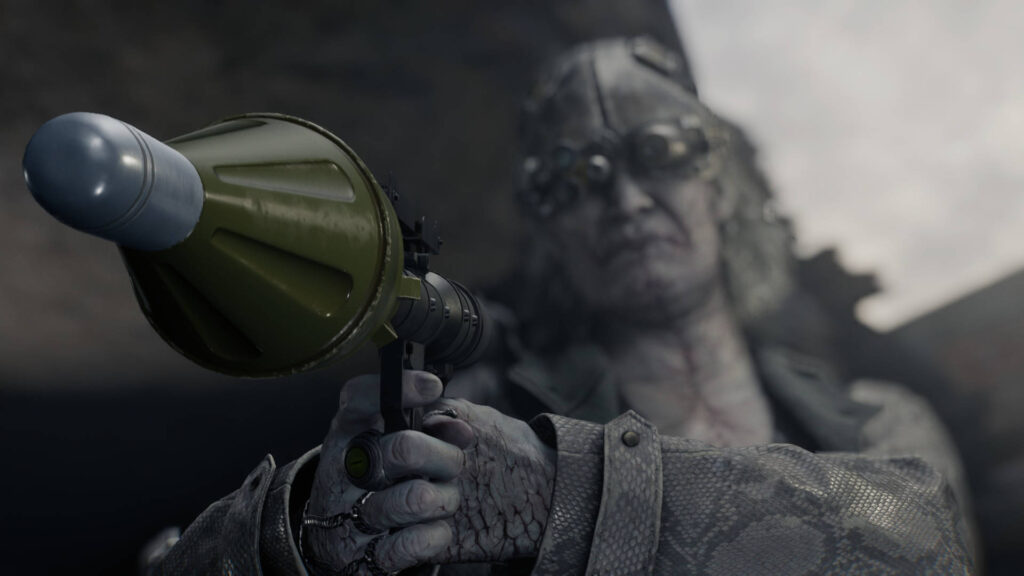
The interludes with Leon are one of a few touches that remind you this is a Resident Evil game. The plot is typically ludicrous, but there are other, smaller moments of levity that soften the more grounded horror experience. The habits of the residents of Rhodes Hill can be funny and surprising in equal measure, while Gideon rides the line effectively between camp and unnerving.
What’s less effective, in my mind, is everything after this. It will be no secret to anyone who’s watched any of the trailers that the game eventually takes you to Raccoon City, where Leon confronts a few ghosts of his storied past. Understandably, this also shifts the game to a more open world environment, dotted with some more confined set pieces.
The comparisons to the Resident Evil 4 remake return here, but less favourably. The combat remains enjoyable, and has some agreeably silly flourishes, including a range of cinematic kill animations. But the world lacks the same colour. Almost 30 years later, Raccoon City remains an ashen wasteland, with no greenery, and few other bursts of colour. This isn’t Fallout, but a touch of The Last of Us wouldn’t have gone amiss. As it is, it’s a bit more Gears of War.
The sterility crosses over somewhat into the story. There’s a notable lag in the open world portion of the game where the only narrative drive is a series of fetch quests, interrupted by sporadic messages from another returning character. The result is a long stretch where your only interactions are with a glorified item box, which takes the role of this game’s merchant. The concept—rewarding kills with currency for items and upgrades—is a nice touch to incentivise action, but a missed opportunity to bring this area to life.
There’s an obvious counter-argument here: Raccoon City isn’t supposed to be a fun jaunt for Leon. It’s supposed to be lonely and oppressive. But he takes relatively few moments of reflection, and later events massively undercut this. The end result is a large portion of the game that invites direct comparison to the Resident Evil 4 remake, by way of the combat and open world, but fails to live up to it. The constant changes of scenery, enemies, and goals in that game are overwhelmingly more interesting than this one.
When that changes in Requiem, it isn’t necessarily for the better. There is fan service in this game, not unexpectedly, and a lot of it is joyous in the moment. But the longer it goes on, and the further you get from the last Grace section, the more I felt like it outstayed its welcome. The shock value of a dumb set piece or surprise will inevitably be lessened on repeat playthroughs, and is less interesting to me than the risks they took with new ideas. It also deepens the tonal shift, as Grace starts to feel more and more like she’s been isekaid in from another universe.
Forgive me, but there’s a weird parallel with pro wrestling here, another art form where 40- and 50-somethings perform logic and biology-defying feats. The fans love the established characters, and the companies want them to keep watching, so they continue to feature ageing stars prominently, well past the point that makes sense. When it comes time to move onto someone else, you realise they haven’t spent enough time building up the next generation. However good the new guys are, your sales drop off, because you haven’t taken the time to get the audience invested.
This is the worry I have for the franchise, and the biggest issue I have with Requiem. It’s a great game by most metrics, and enjoyable throughout, even if its best ideas are front-loaded. But they have something stupendous with Grace, some lightning in a bottle, and they haven’t fully realised it. They took the safe option.
I have no doubt that it’s a popular option with a lot of people. There are millions of fans out there whose perfect Resident Evil game is much closer to 5 than 1, or even 7. Many of them have already opined on how much less replayable the opening section of the game is; how boring it is; how much less fun the experience feels.
I disagree with this, if you hadn’t guessed. But it’s emblematic of the crossroads Resident Evil finds itself at. The two directions it’s pulling in, the two fan bases it’s trying to appease, have never been more evident than they are here. I love the Resident Evil 4 remake, but that game already exists, and this feels lesser for trying to ape it.
There is more to be said about the narrative arc of Requiem, and the extent to which it forced the developers’ hands. I can understand why the latter half plays out the way it does, even if I question individual choices. The conversation probably started with ‘we’re going to Raccoon City’, and worked backwards from there.
There may be a world in which we really can meld all of the Resident Evils together. It feels close at points in the first half of this game, and we may get closer in the announced DLC. But at some point, we’re going to need to stop trading primarily in nostalgia. When the ghosts of Umbrella and the original cast are put to bed, and the franchise needs a new start, what will be its saving grace?