

There is no such thing as a perfect list — so let it instead be personable. The following ten titles are by no means the best of the decade, though objective goodness isn’t something I completely ruled out. They are, however, my favourites.
While some are worthy and others less so, all reflect the things I look for in games: surprise and familiarity, challenge and comfort, verisimilitude and cartoonish excess. I have gushed about them all, and I invite you to wade in.
10. Prey

There wasn’t a lot to convince a person to buy Prey when it first came out. Critics focused on its repetitive enemy design and unspectacular combat, dishing out solid but unspectacular reviews. For fans, the very name was a sticking point, having been repurposed from 3DRealms’ abandoned franchise.
That part didn’t particularly bother me, because – if I can vent a bit here – the 3DRealms game is rubbish. It looks bad even for its era, the story is tone-deaf (a parable about Native Americans being abducted by aliens), the characterisation is ham-fisted and horribly sexist, and the mechanics, though often compared to Portal, aren’t actually very interesting. It did have working bathroom mirrors though, so you know, props for that.
As much as I dislike the original Prey, I wasn’t too hot on Arkane’s previous work either. To me, the Dishonored games fall solidly in the ‘wasted potential’ bracket – Deus Ex-a-likes with none of that game’s intrigue; a charming aesthetic undermined by paltry world-building; Hollywood voice actors dialling in lifeless performances; half-baked morality systems and borderline offensive use of audio logs. They are mechanically sound – inventive, even – but the shallowness of the world negates their strengths as stealth sims.
What drew me to the reboot were the comparisons to System Shock 2. Many more people have played the games it influenced than ever played it – yet all this time later, nothing quite matches its combination of Alien-inspired horror, breadcrumb-trail storytelling and rich RPG mechanics. It happens to be one of the first games I ever played on PC, and the things it does best have scarcely been improved upon since.
The highest praise I can give to the new Prey isn’t that it improves on the original, but that it is System Shock 3 in all but name. Continuing the work of the BioShock series – itself a revival of that game – it shears off some of SS2’s timeworn edges, making it more accessible and mechanically sound. Where it doesn’t compromise is its storytelling, level design and customisation, all of which sparkle and shimmer.
At the heart of Prey is Talos 1, a hulking space station somewhere in near-Earth orbit. In this alternate timeline, JFK survives the attempt on his life, and the U.S. piles even more resources into space travel. The result is the discovery of an alien species, and the creation of Talos 1 to study it. When you arrive at the facility, it has already existed for some sixty years, and it looks the part, an awkward mish-mash of brutalism and art deco flourishes.
It’s a cliche to call a location a character, but this doesn’t feel alive so much as lived in. It genuinely isn’t exaggerating to call this one of gaming’s greatest hub worlds, and it’s here that Arkane really flash their Dishonored chops. Talos 1 is a beautiful place to explore – bursting with character and lavish intricacies – but it’s also tightly designed. This is a game world built to the Warren Spector playbook, where ducts, pipes and computer keycodes provide five routes to every objective.
This is no mere facsimile, however. Prey has some unique tricks up its sleeve, chief among them the Gloo Cannon, which spews lumps of quick-drying putty onto almost any surface. Combined with Dishonored’s movement system, this allows you to scale juxtaposed ‘gloo’ shots like footholds, clambering up walls and reaching seemingly unreachable areas, often at dizzying heights. It would scarcely be a space sim without verticality — or momentum.
Other inventions include the Boltcaster, which allows you to fire Nerf darts at distant switches to open doors; and recycler charges, which mulch nearby materials (and aliens) into ingredients for crafting. If some of the conventional weapons in Prey are less inventive, then Arkane have at least learned a lesson from Dishonored: that stealth should be as compelling as combat.
Despite the station being ravaged on your arrival, this is also a world that’s teeming with life. Though there are a handful of humans, Prey’s standout character is the Mimic: a rubbery ink blot of an alien, with the unique ability to shapeshift into mundane objects.
While occasionally used for jump scares, the Mimics’ true purpose is to foster a constant, simmering tension, as you’re forced to check every room you enter. For the sanguine explorer, this involves deploying tactical goggles to methodically scan around. For the horror-averse, it involves flailing around with your wrench.
Other enemies are less shy, but encourage the use of your arsenal of weapons – solid, punchy – as well as your alien abilities. Underpinning the story is the invention of ‘neuromods’ – memories that are injected via your eyeball, in a scene that owes no small debt to Dead Space 2. As you collect these neuromods, the game teases you with an ethical dilemma: to invest in conventional human abilities, or augment yourself with alien ones.
Like Dishonored, the illusion is more compelling than the outcome, but the broader beats of the story outweigh this minor slip. With input from the great Chris Avellone – writer on KOTOR 2, Fallout: New Vegas and FTL – Prey contrasts its epic sweep with an intimate, intermittent voiceover, brilliantly delivered by Benedict Wong. Playing your character’s brother and science partner, he emerges as a complicated and compelling antagonist; a source of information, impediments and everything in between.
No aspect of Prey is perfect, but through strong gameplay, a stand-out story and a memorable setting, it coalesces into something otherworldly. It is not the punchiest shooter, the most inventive RPG, the most freewheeling Metroidvania, or the most accommodating immersive sim. It is, all told, probably not one of the 10 most objectively good games of the past decade. What it is undoubtedly is a definitive work of genre fiction — and one of my favourite games in years.
9. The Stanley Parable

The Stanley Parable begins in inauspicious fashion. You control Stanley, an office worker who stirs from his monotonous data entry job to find his entire office abandoned. From here, the player is shuttled down corridors by an omniscient voice, inspecting various doors and items, and potentially getting stuck in a broom closet.
You’re presented with one story, in other words, signposted with great honking billboards. “When Stanley came to a set of two open doors,” the Narrator rumbles, “he entered the door on his left.” Singular and certain. And you can, of course – but the potential for disobedience is thrilling. So you naturally take the door on the right.
The Narrator is less than pleased, but he adjusts: “Perhaps he wanted to stop by the employee lounge first, just to admire it.” The world shifts around you, Truman Show style, attempting to preserve the artifice. A single choice in a square room morphs into one of the greatest individual moments in gaming, akin to exiting the Vault in Fallout 3 or cresting the horizon in Breath of the Wild, an expanse of options ahead of you. Galactic Cafe have taken a postage stamp-sized canvas and painted a Picasso.
To appreciate The Stanley Parable, it helps to know what it’s sending up. If you’re a video game veteran, you know that storytelling in games is notoriously difficult (real veterans may rue that stories ever entered the equation). On some level, they offer greater realism and immersion than any other medium, allowing you to memorise a world or space as if you’d actually been there. By most other metrics, though, they struggle: the languors of traipsing around an overworld, the interruptive bursts of action, the dissonance between the moral standing of your character and the genocides they often inflict.
Most games are specifically constructed to be linear, so that they can deliver a single story with minimal diversions. Occasionally, games will present branching paths to make it feel as though the story is your own. This is often illusory, of course: the branching paths almost always coalesce, the diversions doing little to derail the story. The best examples of this – your Life is Strange or Mass Effect – at least resolve miniature arcs within that grander narrative. The worst examples – and this was an accusation often levelled at Telltale games – do little to mask their sleights of hand.
It’s a problem so endemic that many games still undervalue writing, considering it a congenital defect of the medium. As such, it’s also one that the biggest games have left for indies to solve. There have been many valiant attempts, and some truly magnificent outliers, but most owe something to their limited scope, their intimacy, or the peculiar nature of their subject matter. As a template to be applied to triple-A games, they remain exceptions to the rule.
Seven years on – and nearly a decade since the original mod – it’s easy to undersell the influence The Stanley Parable has had. Few games have tried to ape it, or borrowed from its box of narrative tricks. There are a few reasons for this. Partly, it’s that its format is so idiosyncratic, relying heavily on the relationship with an omniscient narrator. But it’s also that its genius is so particular. Few games can afford to invest themselves so heavily in the notion of player choice, to the extent that exploring the boundaries of the game is the game. Fewer still openly mock their own limitations, or pull back the curtain so readily.
Look a bit harder, though, and Stanley turns up in some surprising places. Prior to The Stanley Parable, the genre of the ‘walking sim’ was epitomised by titles like Dear Esther, which inverted traditional games by making the mechanics supplementary to the story. In The Stanley Parable, by contrast, the mechanics are the story. The voiceover is domineering, but it is predicated on your engagement with the world.
Where traditional walking sims gave you no choice, The Stanley Parable gives you dozens, even as it sets out to prove that they aren’t really choices at all. And in doing so, it arguably changed our relationship with these kinds of games. Pick up an auteur-driven, idiosyncratic indie game in 2020, and you expect the same sort of personality; the subversion of tropes; the wry barbs; the branching paths and fourth-wall-breaking humour. It may not have laid out a template for new games, in other words, but it did prove what they can be. Would we have gotten Undertale without it? Kentucky Route Zero? Oxenfree?
The Stanley Parable is a wickedly funny game, and that is enough of a rarity to earn mention. But to be funny and pointed, to satirise and skewer – that’s something else entirely. This is a treat of a treatise on game design, one that embraces the flaws that hamper so many stories, and encourages you to test the limits of its virtual world. Despite eschewing traditional storytelling, it managed to have the most interesting story of all.
8. Spec Ops: The Line

I’ve never been one to prioritise mechanics. Some would say it’s because I’m not very good at games, and I wouldn’t completely disagree with them. But it’s more that I don’t derive enough pleasure from something that’s purely mechanical to invest enough time to get good at it. I’ve never liked fighting games that much because they rely on a level of rote memorisation and simple grinding that I simply can’t be arsed with. There are exceptions – some of which are on this list – but I generally prefer a ‘one and done’ experience to something that demands repeat visits.
In a lot of ways, Spec Ops: The Line epitomises this. Its gunplay – the keystone of any shooter – was functional even at the time of its release; satisfying, crunchy even, but more emulation than reinvention. It was nice enough to look at, but not a technical showcase. The soundtrack crackles, but there’s only one scene where it thunders into life. As you trudge through another set-piece to a chorus of growling guitars, there’s a familiarity to proceedings that almost feels deliberate. And then it hits you. And boy, does it hit you.
To talk about Spec Ops: The Line in any depth, of course, is to ruin it entirely. This is a film you want to see without a trailer. But like the best films – and unlike almost any game – it pulls a trick at one stage that completely recontextualises everything that came before it. To think that nobody had ever looked at the source text and thought to apply it to games is a madness. It’s a magnificent, cackling gambit.
What is actually magnificent about the game, though? It isn’t particularly fun to play, yet you keep playing. It isn’t a fun experience on many levels, to be honest. Yet like the characters, you keep trudging forwards. Have you ever had a game taunt you before, goad you? Actively suggest you stop playing it? Make you laugh openly at the sheer gall, the great swaggering cajones of the developers? Spec Ops achieves all of this and more.
I might be bigging it up too much. It’s dumb on some levels, hypocritical on others. I’ve played it twice, I think, but I haven’t returned to it in at least six years, and I don’t particularly want to. Spec Ops: The Line is not a wholly successful game, without question — but as an adaptation, as an experience, as a breeding ground for criticism, there really isn’t another game like it.
7. Stardew Valley
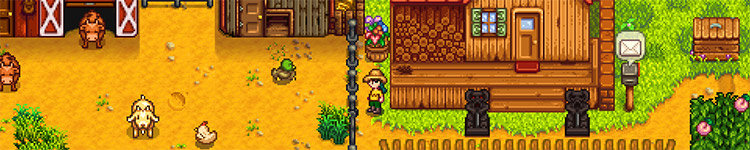
Every game on this list is one that, on some level, I’ve fallen in love with. Stardew Valley is easily the most recent, and bears all of the hallmarks: less of a warm nostalgia and more of a verdant, gushing passion. And yet warm nostalgia is Stardew Valley’s stock and trade. Upcycling the best elements of the venerable Animal Crossing series and the lapsed Harvest Moon, this is a game whose charm flows in rivers, and flowers from its tilled soil.
The idea is well-worn: ground down by your desk job at an Amazon-like corporation, you take up your grandfather’s inheritance and move to the eponymous Stardew Valley. There you find a run-down farm, a charming town, and a motley crew of residents. By mining, digging, chopping, fishing and flirting, you set about this idyllic new life at your own pace.
The game would merit attention if it was simply an excellent life sim – and it is. Every aspect is mechanically satisfying, with a series of tasks and branching skill trees rewarding your investment in the game’s many pastimes. But the soul of the game, and the way it sucks you into its world, is the cast of characters you’ll be interacting with each day.
Each starts out as a stranger, either guarded or exchanging basic pleasantries. But through performing odd jobs that land in your letter box or are pinned to the community notice board – or more actively, by offering gifts – you can start to curry their favour. Each character has a laundry list of likes and dislikes, which as of the latest patch, are logged as you stumble upon them.
By observing their hobbies and talking to others, you start to learn through trial and error what they like best, and what endears them to you the fastest. Treat them well enough, and you may win not only their friendship, but also their affection. These are friends with benefits, too; as your bonds grow, your neighbours will begin to send you buff-inducing food, recipes, minerals, and even invites for dinner.
The effect is not just a simulacrum of village life, but an RPG of immense depth and heart. As you naturally build your relationships with characters, they reveal more of themselves, and begin to allow you into their homes, giving you more opportunities to offer them gifts (each character has an ever-changing schedule, making them hard to track down).
Simply by playing the game on its most basic level – improving your farm and your stats – you will get enough of a window into their wants and habits to establish your personal favourites. At some point, the busywork of building your farm and making money becomes secondary to building your relationships – and at that point, romance beckons.
While the writing is simplistic, the notes of tragedy, melancholy and yearning in the events that unfold endear you to the whole cast, making the target of your ultimate affection a surprisinly brutal choice. In some cases, your affections may turn an entire character’s life around; in others, your efforts – conducted over days of gameplay – are ultimately forlorn. Stardew Valley is a life sim beyond The Sims or anything much before it – and unquestionably one of the greatest games of the 2010s.
6. FTL: Faster Than Light
There are some games you only need to play through once – some which are bad, and some which are so good that you want to ziplock the memories, and preserve the experience in amber. There are other games that you return to time and again; a crutch or a comfort blanket, something you can play almost on autopilot. And then there are the games that draw you back in slowly, once in a blue moon. The games that sneak up on you, a dormant virus, hibernating and gestating in your mind.
FTL doesn’t have the compulsive feedback loops of many multiplayer games, or the memorable moments of many singleplayer campaigns. What it does have is extraordinary depth, and the quality to merit your time. This is a game that’s not just supremely fun to play, but exceptionally well written, and perfectly, maddeningly difficult. It’s one of the least flawed games I have ever played, and something I can still see myself returning to in another ten years.
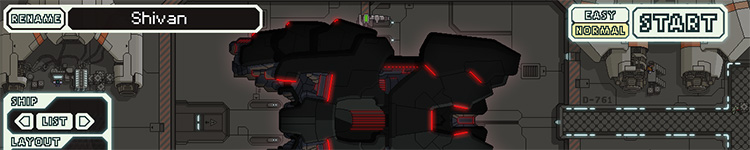
The premise is simple: you’re a scout for a space-borne rebellion, and you have an urgent message to deliver. Unfortunately, the rest of the fleet is at the edge of the galaxy, preparing for a climactic battle. To reach them, you’ll have to weave your ship through systems, jumping between stars and scavenging resources to upgrade your craft. On the way, your crew will negotiate a number of random events, from mundane battles to multi-stage quests that will force you off your intended path. As well as being sharply written, these interludes introduce you to the game’s alien races, and encourage you to gamble on coin-flip decisions.
FTL is essentially a roguelike, a genre I usually bounce off of for want of meaningful progression. Where it hooks you is the sheer amount you can achieve in the space of a single playthrough, and the ways in which it encourages you to plan ahead. The money you gain as you play can be invested in a number of different areas, from upgrades to your ship’s systems and reactor – necessary to power those systems – to weapons and passive improvements. You’ll find these at shops as well as picking them up for free, but the selection is limited, funnelling you towards certain builds.
This alone ensures that every game is slightly different, both in your loadout and how this dictates your style of play. Get a weapon that starts fires, for instance, and you’ll need a way to efficiently whittle down your opponents’ shields; this might mean praying for an ion cannon, or investing in rapid-firing drones. But weapons are far from your only…well, weapon. You’ll also start with a skeleton crew – human at first, but you’ll unlock aliens too as you go. While humans are Plain Janes, alien crew members have particular strengths and weaknesses: some are fast and deadly, while others are proficient in certain skills, or can survive low oxygen environments.
These are helpful for tasks on your ship – repairing damage and crewing systems, for instance. But they can also be used to fight. Enemies will sometimes teleport onto your ship, breaching doors and attempting to kill your crew; install a teleporter, and you can return the favour. If an enemy ship is losing, however, they may attempt to warp away. If you don’t kill all the crew in time, or disable the engines, you might lose your entire boarding party. Lose a crew member through boarding, bombardment, fires or a lack of oxygen meanwhile – those two often go together – and your performance in battle will dip.
This is the dance of combat in FTL, and the means by which it whittles you down. Often, a campaign is just about getting that next dose of cash, that next great find that will allow you to perform critical repairs, and survive into the next system. It’s the forlorn hope that you’ll get the exact weapon that you need, or simply that the next shop will sell weapons at all. It’s the dice roll on random events that can mean the difference between gaining a crew member and losing one. It’s a sci-fi board game to match the greats of the genre, and a roguelike unlike any other. It is a magical, infuriating experience, and one of the greatest games of its ilk.
5. Life is Strange

Whatever you think about episodic games, there’s something special about them when they work right. Everyone sort of accepts the inherent foibles of video game storytelling: the endless splurge of content happening more or less in real time, where narrative beats are interrupted by long bursts of gameplay. Parcelling out a story in episodes allows you to be selective about those boundaries, nailing the pacing and ensuring that the player sees everything you want them to see.
Lucky me, then, that I had a review copy for this game. Luckier still that it wasn’t the first – I’d played developer DONTNOD’s previous effort too. Very few people did, and not without reason – it wasn’t very good. I made a point of saying so online, and how much I was enjoying Life is Strange by comparison, some slightly dodgy slang excepted. Embarrassingly, both the studio lead and the writer for the game liked my barrage of tweets.
My admiration for the game thereafter didn’t need much dampening. While the slang calmed down a bit, the story ramped up, and fully realised its early promise. More than perhaps any other episodic game, Life is Strange really feels televisual, casting aside the usual constraints of the adventure game genre. The central conceit is one borrowed from Remember Me, though endlessly improved: the ability to rewind and manipulate time. A simple right click will allow you to cycle back through the last half-dozen seconds, before you made a critical choice.
This cleverly circumvents a common criticism of adventure games and choice-driven games in general, whereby the action you think you’re taking plays out differently than you’d imagined, and locks you into a path you regret. Life is Strange allows you to see the immediate outcome of every pathway – that is, what you say or do and what the response is – but stays schtum on the further repercussions. This simple trick made one of gaming’s oldest genres feel fresh and exciting, and in doing so, put a nail in Telltale’s coffin.
This is more than just a brilliant adventure game, however. One of the attributes which made classic adventure games so unusual was their unique ability to appeal to a broad audience – owing perhaps to simple controls and a storybook quality – leading games like King’s Quest IV to report a mostly female player base.
The real genius of Life is Strange is in how it revived this phenomenon, and did so completely on its own terms. This wasn’t the first game to ape a teen drama, or to put women front-and-centre, or to prioritise meaningful choices. But the combination of these elements at a time when Telltale’s ‘cutscene and QTE’ approach dominated the format was brave, bold and exciting.
So too its approach to storytelling, and the way it its mechanics complement the narrative. By giving you the opportunity to rewind time and test out the different decisions you can make, the game reduces the anxiety of timed decisions in Telltale-style games, without dulling the addictive edge of its branching story. While you may get a hint of the outcome your actions will have, rewinding time never feels like a cheat. The concept of the ‘butterfly effect’ is well-worn, but its application to games still feels fresh today, and was a tonic for the adventure game genre.
This is a story that’s affecting and thrilling in equal measure; that presents choices with tangible, brutal consequences; and that’s complemented by mechanics which don’t distract from the narrative, but enhance it. Life is Strange is a game which, some five years later, has still been scarcely imitated. For a studio teetering on the brink of bankruptcy after an unpolished debut, it was a stunning gambit – and a high point for its entire genre.
4. The Witcher 3
The best way to sell the Witcher 3 to someone isn’t to recommend the previous games, but to have them play one of its contemporaries. Take Dragon Age: Inquisition, which was unlucky enough to launch around six months earlier. It’s a game that hews closely to BioWare’s core strengths – namely dialogue – but demonstrates the genre’s traditional weaknesses. Its hub worlds, gorgeous though they are, are largely empty, and one side quest is almost indistinguishable from the next. It’s a game whose core feedback loop involves farming experience through mundane tasks in order to progress a strong main story.
The first two Witchers were fine RPGs, albeit on different levels. I have a huge amount of respect for the first one, which is another way of saying that it isn’t very fun to play. Still, for a studio’s first ever title it was an innovative effort; a game which uniquely punished you for remaining neutral instead of compromising your morals. The Witcher 2 was a visual extravaganza and a tight action game, with the hidden depths and weirdness culled from so many of its American contemporaries.
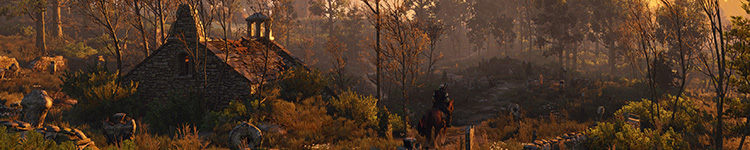
The Witcher 3 is in a different fucking universe. It’s less of a game at times and more a trans-media experience. There are games that have compelled you to fish, or mine, or do your taxes, but it’s usually to some ultimate end, some endless grind to become the world’s greatest taxman. There are games which are pretty, that you’re compelled to screenshot, but in a static sort of way, a neat cluster of digital geography. The Witcher 3 is a world. It’s a functional space that rewards exploration in a way nothing had ever managed before it.
Where The Witcher 3’s forebears often approached narrative from an overarching perspective – using your character as a conduit for a broader story – The Witcher 3 is Geralt’s story. As such, there’s an imperative that everything Geralt does is interesting, and every outcome reflects on his character in some way. This is an approach that mirrors the source material – The Witcher games borrow from the same books as the recent TV show – but also feels wonderfully fresh as an approach to game storytelling. In a genre where the majority of your tasks are mundane grinds, every session is its own episode.
There are obvious highlights, but it’s probably more pointed to say that there are no lowlights. Even the most boring fetch quests are delivered with a nod and a wink, such as the time Geralt rescues a frying pan for an old woman, or when you have to file the paperwork to reclaim a bank account. The Witcher 3 delivers not just because of its writing – uniformly excellent – but because in rejecting a silent or placeholder protagonist, Geralt is afforded his own reactions. You can make different decisions, but you can’t decide who you want to be, as people have decided that for you.
It’s one thing to simply pack a world with meaningful content, and on this point CDPR delivered. Unlike the Ubisoft stable, the majority of map markers actually highlight something interesting, be it a corpse and a note or an original and interesting quest. Even the tasks that would normally be radiant missions or XP farms in other games have value: free a village from monsters, for instance, and not only do people return, but you’ll often find a merchant with them, adding utility to that part of the map.
Where I think The Witcher 3 really succeeds, though, is how its mechanics underpin the story. Geralt’s profession as a monster hunter lends narrative weight to simple ‘seek and destroy’ style quests. His hypnotic Axii ability works perfectly as a conversation mechanic. His trusty steed is ideal for commuting and combat. His Igni ability allows you to instantly light torches and braziers. None of this is necessarily new to The Witcher 3, but in an open world setting, it all fits like a glove.
The convincing nature of its world lies partly in its rich source material, but there’s a reason that the third entry was so many people’s first. The games have always assumed a certain level of familiarity with the books, and else have left the lore to interpretation, with established characters being introduced with little reference to their histories. It’s a smart, unpatronising choice, and it reflects on the confidence they have in their work. That CDPR managed to make the overarching story coherent to newcomers is a minor miracle; to usurp it with smaller stories is a work of divine genius.
The Witcher 3 is a patchwork quilt of minor quests, victories and upsets, all under the blanket of a grander yarn. It’s a great action game, and at times an action movie. It feels adult, but it’s rarely gratuitous. Its relationships are varied and interesting, and your choices all the more meaningful because of what they force you to sacrifice. It’s also massive, gorgeous, and bloody good fun. You can never run out of good things to say about it, so I’ll end it here – if you haven’t played it, toss it a coin.
3. Shogun 2: Total War

The games I come back to time and again have a few things in common. First off, they can usually be played while doing something else – either turn-based or easily paused. Second, they tend to be endlessly iterative – simulations that create endless different scenarios within a familiar setting. And third, they tend to be compelling RPGs – be that moulding players in FIFA, or building empires in Stellaris and Civilisation.
It took me two months of writing this post on-and-off to even think of Shogun 2, and even then, it was someone else who prompted it. I think I took it for granted. I come back to FIFA all the time, sure, but I hate it and myself for playing it; for all its mechanical genius, it is a broken, loveless grind. Other games are better but burn shorter, like Stellaris and Civ, which both thrive in the early game but don’t always demand to be finished. Even XCOM falls into similar patterns when you start to succeed, with tech trees quickly losing their sparkle. But Shogun 2 is different.
If you’ve ever played a Total War game (all the way back to the original Shogun in 2000), you know how all of this works. Taking control of a fledgling clan, you build structures, armies and territories on the way to forging an empire. At its core, the game is divided into two distinct portions: the tactical layer and the combat layer.
In the tactical layer, you administer your provinces, build, strike alliances, declare wars, and move your troops around the map, much in the style of Risk. In the combat layer, you warp directly into the battles you’re waging, taking control of your armies in real time. A more mainstream analogue would be FIFA Career Mode – except instead of playing and managing, you fill the roles of general and emperor.
Unsurprisingly, this gives you an immense amount to do. There are buildings to create and upgrade; finances to manage; trade espionage, diplomacy to conduct; wars to wage; marriages to arrange; and more besides. This is a game of remarkable depth, but profound simplicity, too, cutting out some of the waffle of its predecessors. The UI is clean and perfunctory, the systems self-explanatory, and the game beautiful. Even seven years on, the Ukiyo-e character portraits flourish, and the pastel shades of the overworld soothe.
The beauty of a game like this is easily underestimated, given the time you’ll be spending with it. But Shogun 2’s strength is as much about the setting as the art style. The Rome and Medieval wings of the franchise are fine fits, but Total War has never felt more comfortable than it does in feudal Japan. The game reclines into the period of the Ashikaga Shogunate, straddling the age of samurai and the introduction of guns from the West. The balance of melee and ranged options is perfect, while the depth and colour of the game’s armaments – all rooted in Japanese history – far outshines those other titles.
The enormity of options makes for a myriad different playthroughs, but so do your starting choices. Different clans can have varying effects on your play style, with perks encouraging you to bulk out your armies with specific troops or units. Better ashigaru will force you to prioritise quantity over quality, and focus on drawing armies into your massed spears. Cavalry will naturally push you towards mobility, and kiting armies into the positions you require. The position of your starting provinces meanwhile will change the resources you receive, and who you can invade or ally with – a pivotal balancing act as your armies become stretched.
It is a balanced game, too. So many strategy games fall into a late game slog, as you exhaust tech trees and emerge from your turtle shell to slowly conquer the map. Shogun 2’s tech trees are vast, and the rewards they give you meaningful, posing genuine quandaries over which paths to take. But crucially, the game is also extremely challenging. Expanding your clan means risking the ire of powerful rivals, and finally the Ashikaga Shogunate, to which all clans are vassals. When you’ve garnered enough attention, the game essentially pits everyone against you – putting you back on the defensive.
I’d honestly struggle to name another game that succeeds on this many levels. Shogun 2 is fun to play in both its iterations, and once you’re done with the main campaign – and you need never be – there are two all-time great DLC packages to contend with, exploring the eras before and after the main game. For strategy lovers, weebs and armchair emperors, this is as good as it will ever get.
2. Mass Effect 2
On some level, the most critically acclaimed Mass Effect game might also be my least favourite. It doesn’t have the tightest shooting mechanics (that’s ME3), it has arguably the worst environments (all stifling corridors, chest high walls and sepia-filtered dust bowls), it features the least customisation, the worst skill trees, and a story that ultimately means little in the context of the trilogy (nothing you do here really matters, only delaying the inevitable).
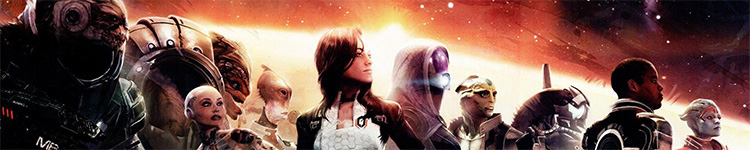
What Mass Effect 2 does have is characters. And by god, BioWare were good at this.
They aren’t all hits. Jacob is a character clearly written to be as inoffensive as possible, with the effect that nothing he does is remotely interesting. Miranda – your aloof, robotic chaperone – is boring almost by design, while charming thief Kasumi is underutilised.
Elsewhere, however, the game shines like the Milky Way. With a viciously smart opening, which kills Shepard and casts your crew to the four winds, the developers immediately clear the board, and set out your new objectives. Waking up two years later, you’re forced into the employ of a former enemy with a penchant for vicious experiments. Old allies are wary of joining you, old enemies are difficult to trust, and there’s a whole new existential threat to deal with.
Like its predecessor, Mass Effect 2’s combat is nothing to write home about (a shame, given how much of it you’ll be doing). Where it shines is the perfection of a formula that has scarcely been imitated, let alone bettered: the hub world. This will be familiar if you’ve played a BioWare game before: Mass Effect 1 gave you some downtime on your ship, and the incentive to talk to your crew, namely to develop a romance.
In Mass Effect 2, however, the process is properly gamified. And while the dialogues are extended, romances expanded and your crew size increased, its real masterstroke is marrying its dialogue and morality systems to the success of your final mission.
At a relatively early juncture, it becomes obvious that the loyalty of your crew will affect the outcome of the ending, whatever form that may take. To secure it, you will have to talk to all of your crew members enough (and say the right things, and act the right way) to unlock dramatic ‘loyalty missions’ – personal favours which take the form of expansive side quests.
In this way, each character is given a fully-fledged arc, where your intervention either settles or inflames a personal issue. Interspersed between these are a handful of brawls on your ship, where you are forced to play peacemaker. If your paragon or renegade points aren’t strong enough – an admitted weakness of the first two games – these divides will widen and simmer. Fail to manage your crew effectively, and you will endanger not only the mission, but also the lives of your crew as a whole.
If the characters were lacking and the writing stilted, this could easily seem like a cynical ploy. Thankfully, these are some of the best-written characters in gaming. Fan favourite Garrus returns with a flourish, eminently quotable (and dateable). There’s Zaeed with his snarling shotgun diplomacy; Samara, ascetic but touched by tragedy; Thane, introspective and enigmatic. And Mordin – oh, Mordin. The very model of a scientist Salarian…
In my more wistful moments, I often return to the idea of what makes a great RPG. Take Skyrim: many people consider it to be a great RPG because of the myriad ways you can customise your character, focusing on the skills and tasks you enjoy. They cherish the breadth of experiences rather than the depth of them, and how your mastery of different skills is rewarded in tangible ways.
I consider Skyrim to be a terrible RPG because the outcome of all of that smelting and crafting and questing is meaningless: characters never react to your improvements differently, and the world itself doesn’t change. On a mechanical level, it’s a perfectly fine game; but on a storytelling level, on the scale of emotional depth and investment, it completely fails to register.
Mass Effect 2 by contrast is a game that’s chock full of meaningful choices, even if they only occur in the moment. It’s an RPG in the truest sense – one that gives you palpable agency in a colourful, fertile world. It’s a game that’s occupied by believable characters who you want to engage with, and who react to your choices and decisions in a meaningful way. There are foibles, but as Jack would say, fuck ’em – this is one of the all-time greats.
1. XCOM / XCOM 2
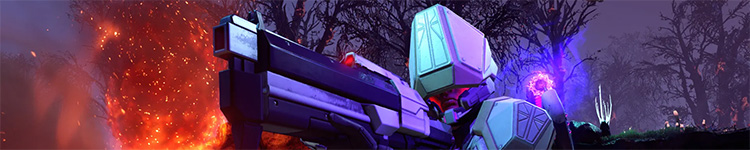
Put a gun to my head – particularly a big alien one – and I’d probably say that XCOM: Enemy Within is my favourite XCOM package, just on the strength of the premise. But really, there’s little to choose between either of these titles when they’re fully adorned with expansions. Taken as a collective, they represent the perfection of the turn-based strategy genre, scratching an itch I first established with Advance Wars. While purists may find more in the original Julian Gollop games, what Firaxis did in updating that franchise for the modern era is nothing short of miraculous.
Like most turn-based games, XCOM is in effect a digitised board game. Operating on an isometric grid, you reposition your band of soldiers one-by-one, with the goal of killing aliens and completing objectives (killing all of the aliens often is the objective, though not always). At least initially, the aliens massively outgun you, and will kill your soldiers in just one or two hits. The idea, therefore, is to position your troops behind scenery, slowly advancing until the aliens’ positions are revealed so you can dispatch them safely.
Phrase it like that, and the game seems effortlessly simple. It is achingly difficult. For one thing, there’s never enough cover, and not all cover is made equal. Some cover will protect you for a time, but is destructible when hit, at which point it may collapse or even explode. Other cover only offers half rather than full protection, meaning you might still be killed by a good shot (all shots have a hit percentage, meaning you can miss a shot from centimetres away). And the isometric grid means that cover tends to only face one direction, making it incredibly easy for better armoured and more mobile aliens to simply flank you, and kill you anyway.
The means by which you deal with these problems vary. One is that you simply die, a lot. Death is a routine part of XCOM, particularly when you play on Iron Man mode, which prevents you from loading a save every time you make a mistake (a strategy for cowards, which I sometimes use anyway). Your soldiers will start out under-prepared, meaning that they will naturally die a lot, especially while you’re still learning the game. As they gain experience, they’ll also gain health and abilities which will allow them to survive under more intense conditions. What this actually does, however, is make it even harder to accept when they die. Which they will. A lot.
These are punishing games, then, but also hopeful ones. On a narrative level, the first game tells of your successful defence of earth from an alien invasion – at least, if you complete it. The second game assumes that you didn’t, and sets you up as the rebellion against an occupied earth. In both cases, you build out your support as you complete more missions, either pleasing the major nations or building connections between resistance groups. The fact that it’s so tough to succeed makes it especially satisfying when you do.
Like the best turn-based strategy games, XCOM is also a potent RPG. Advance Wars was partially successful on this front by establishing a story framework for your victories, but never managed to be quite as compelling. This is more akin to something like Fire Emblem, particularly in the weight that deaths hold. XCOM makes a point of allowing you to customise your squad, either by auto-generating their names and appearances or allowing you to add your own. The result is that you become uniquely attached to them, invested in their success, and devastated when the story you’ve concocted for them comes to an ignominious end.
None of which is to discuss the gameplay of XCOM, which is in itself a joy. Different soldiers have different combat classes, which are assigned to them when they gain their first promotion. These classes give them different skill trees and weapon specialisations, allowing them to serve unique roles in your team. A regular team comp will involve one sniper, one healer and a mixture of the other two classes, but different maps may require different solutions. Of course, you often won’t know this until you land, and realise there is no elevation for your sniper, or that you’re in a mission that befits a high movement range.
Combat usually plays out to the thrum of ballistics, laser fire and explosions, and this is an enjoyable enough ballet on its own. But as you progress, new ideas are thrown into the mix. If you can afford them, new armours, weapons and abilities allow for different ways to traverse terrain (e.g. grappling hooks and jetpacks), as well as new ways to kill things. In Enemy Within, you can enhance your party with giant mech suits and combat robots; in XCOM 2, you have the ability to create psychic operatives, which borrow some of the aliens’ long range and AOE attacks for your own use.
Like most RPGs, XCOM is at its heart a power fantasy, but it’s one that feels well earned. The difficulty curve is such that by the time your squad of soldiers is legitimately powerful, the catharsis is incredibly sweet. Live, die, repeat – until you’ve saved the world. Few things – and few games – are better.
Honourable mentions
FIFA (literally any of them)
The toxic ex I can never quite escape. Its core feedback loop and the endless stories of Career Mode remain hopelessly addictive, even when they are tempered – and they are always tempered – by a litany of bugs, terrible design decisions and a lack of meaningful progress. It’s a series powered entirely by dopamine, even if you aren’t playing it for the ethically dubious money machine that is Ultimate Team. I hate it, and I may never stop playing it.
Splatoon
Proof positive that Nintendo are still the greatest single creative force in gaming. Before Fortnite, Apex Legends and the other colourful kids’ shooters, there was Splatoon, and it arguably outshines them all. Like all Nintendo’s best ideas, it was completely bonkers: a kid-friendly spin on the shooter genre, up to then dominated by Call of Duty. Even crazier, it appeared to riff on the Graffiti mode in Tony Hawk’s Pro Skater, where you’d skate and grind up walls and across scenery to paint it your colour, while your opponent did the same.
If the premise oozed inky charm, the game latches its suckers onto your heart, and never lets go. Its simple premise is enlivened in typical Nintendo fashion, with iconic character designs and a singular, vibrant aesthetic. There could be no more dazzling rejoinder to the miserable, muddy greys of its contemporaries. And yet there’s substance here as well as style. An enormous array of weapons – many patched in over time – take the role of classes, with different guns (and buckets, and umbrellas) mixing different abilities for hundreds of potential playstyles.
This is to say nothing of the fun singleplayer mode, its community aspects (the Splatfests and their user-generated artwork) the DJ hosts and their music (hologram stars in Japan), the refreshing brevity of its rounds, or the way the game manages to be fun even when you’re losing. Or indeed, the sequel, which does everything the original did and more. If I’ve docked it points for anything, it’s that I’m not really a multiplayer person, and even this wasn’t enough to keep dragging me in. But what I did play, I loved, and it merits a place in any list.
Super Mario Odyssey
Ask a lot of people, and ‘favourite 3D Mario game’ is not a hotly contested crown. Mario Sunshine has a nostalgic glow but is undoubtedly not that great, while Galaxy is hamstrung by its platform and controls. And then you come to Odyssey, and like oil and water, the room divides. You have the naysayers, who suggest that it is simply too easy, and that its ‘see what sticks’ approach to new mechanics doesn’t pay off. And you have me, who loved every minute of it.
Odyssey isn’t a difficult game, it’s true. Nor is it one that will bring you back for more – I barely played beyond the endgame, and haven’t touched it in the 18 months since. But that initial run is a thrilling, mile-a-minute joyride through Nintendo history. It’s a carnival of colours, magical moments, nods, winks and inventive, bombastic flourishes. The Moons are sprinkled around liberally, but so many are so fun, and the discovery is largely its own reward. The game is a digsite full of gems, artefacts and ideas – little wonder it starts with a dinosaur level.
Once again, I find myself coming back to the idea of games as experiences, rather than exercises. Do you need a game to feel challenging to enjoy it? Do you derive more satisfaction from being tested than sitting back and enjoying the ride? Are you an Automatic Level person in Super Mario Maker, or do you need a 0.001% completion rate to spank yourself silly? I’m arguing myself into a place on the list here, so I’ll come out and say it: Mario Odyssey isn’t a great Mario game, and it probably doesn’t deserve to belong here. But it is a great game, and I love it all the same.
Portal 2
I talked a lot in my Stanley Parable section about that game’s humour, charm and smarts, and the influence it has had on other games. Well, if there’s one series that inspired The Stanley Parable, it’s Portal. While the self-contained original is a clearer influence, Portal 2 is a colossus in its own right: not just fantastically inventive on a technical level, but still arguably the funniest game ever made, with three of the most memorable ever voice performances. That two of them came from celebrity voice actors – often heard actively cashing their cheques in other games – speaks to Valve’s mastery of their craft.
Ultimately, I positioned it as a fight for a place between those two games – and while Portal 2 is unarguably the greater experience, The Stanley Parable is more meaningful, more revolutionary, and arguably more fully-formed. Portal 2 is a Toy Story 2-tier sequel, but it does hit many of the same beats as the original, and some of its new mechanics slightly outstay their welcome. It is inestimably good, but it squeaks just outside of my top 10.
Fallout: New Vegas
Fallout: New Vegas rests in a weird place for me – the modern Fallout game that I most respect, but never truly took to heart. My first introduction to the series was Fallout 3, a vast and brilliantly designed sandbox with absolutely abysmal writing. New Vegas is a much smaller sandbox – or at least, much smaller feeling – with almost peerless writing.
It’s everything I want, and everything I didn’t have. Even though the games released within barely a year of each other, I played Fallout 3 years before I discovered New Vegas. I love the atmosphere of the Capital Wasteland, the Metro lines that would lead you into isolated areas of the map, Galaxy News Radio, the dumb morality system, the tragic dioramas of environmental storytelling – I love it all.
And yet I recognise that by a lot of other metrics, it’s an awful Fallout game, and not brilliant on its own merits. It looks hideous, with a nuclear green patina over a charcoal grey landscape. It’s repetitive, the gunplay is underdeveloped, and there’s scarcely a memorable character or line in the whole thing (I’d volunteer Liberty Prime, and Fawkes, and maybe Reilly at a push). But the nostalgia is there. It enveloped me, in a way New Vegas never quite managed. It has that horror-tinged atmosphere that I cherish.
I might never return to Fallout 3, while I had a huge amount of fun with New Vegas. It is a better game – it has a laundry list of great characters, and hews more closely to the rhythms and the humour of the originals. It’s masterfully constructed, has a vastly superior main story, great quests, and better mechanics. Its creation, in a shitty engine over the course of 18 months, remains a miracle of colossal proportions.
I love it, but it’s a contested love. It falls just outside of my top 10.
The Legend of Zelda: Breath of the Wild
Breath of the Wild is an exceptional game, make no bones about it. To compare it to Resident Evil 4 – a game which refreshed a franchise and established a new template for its genre – might be underselling the size of its task. Not only had Zelda hewn to much the same template for 30 years, it had done so with no real signs of dropping off. Upending this meant more than just improving on existing tropes and mechanics; Zelda has to bend the open world to its will.
Mechanically, Breath of the Wild is a revelation, such that any open world without climbing or gliding now feels strangely incomplete. Its atmosphere shines too: a delicate, wilting score follows you through a truly mammoth open world that never overstays its welcome. Breath of the Wild manages to envelop you in its world – a beautiful world, in a way that graphically superior games struggle to match – without the density of content of so many modern RPGs. It combines the meaningful progression and soul of The Witcher 3 with the pastoral beauty of Horizon: Zero Dawn, and even makes crafting a less irritating presence.
It falls just outside of my top 10 for purely personal reasons. It’s been a ridiculous decade for games, and my list is characterised by experiences that grabbed me, and resonate on some emotional level. Breath of the Wild is impressive, influential, beautiful, and on some level meaningful, but it never quite captured me in the way that I wanted it to. It feels like the prototype of something great; a future perfect. I am genuinely gagging for the sequel.
Rocket League
I didn’t include this largely because it’s a bit of a cheat. Before Rocket League, there was Supersonic Acrobatic Rocket-Powered Battle Cars, a PSN game which is functionally identical to its super-selling sibling. I’m also not a big multiplayer person, as I’ve mentioned above. And yet this is probably the multiplayer game I come back to most, for what that’s worth. It does what it does perfectly, and that deserves at least a runner-up spot.
It’s football but with cars (and not, apparently, inspired by that bit on Top Gear). That’s really all you need to know: you can rocket boost, and drive up the walls, and launch yourself through the air, but the basic principle is the same. You drive around and you kick the ball in the goal. And the universality of football is undoubtedly part of what sells it. This is a simple game that people have loved for centuries, drilled down to its theatrical essence.
Rocket League is slightly more than that, of course, or it would be competing on the same turf as FIFA. In reality, this fits more into the niche of Red Card or Mario Smash Football, a parodic playground version of the sport. There’s joy in scoring, but in missing, too: your car hurtling forward in a parabolic arc, poised to make the perfect shot, and then flipping and flopping uselessly past the ball, while someone else scores at your end.
It is pretty much the perfect multiplayer game: quick, silly, deceptively deep, full of customisation, and random enough to make it a fair playing field. 9000 words later, it’s a fine way to end this list.